
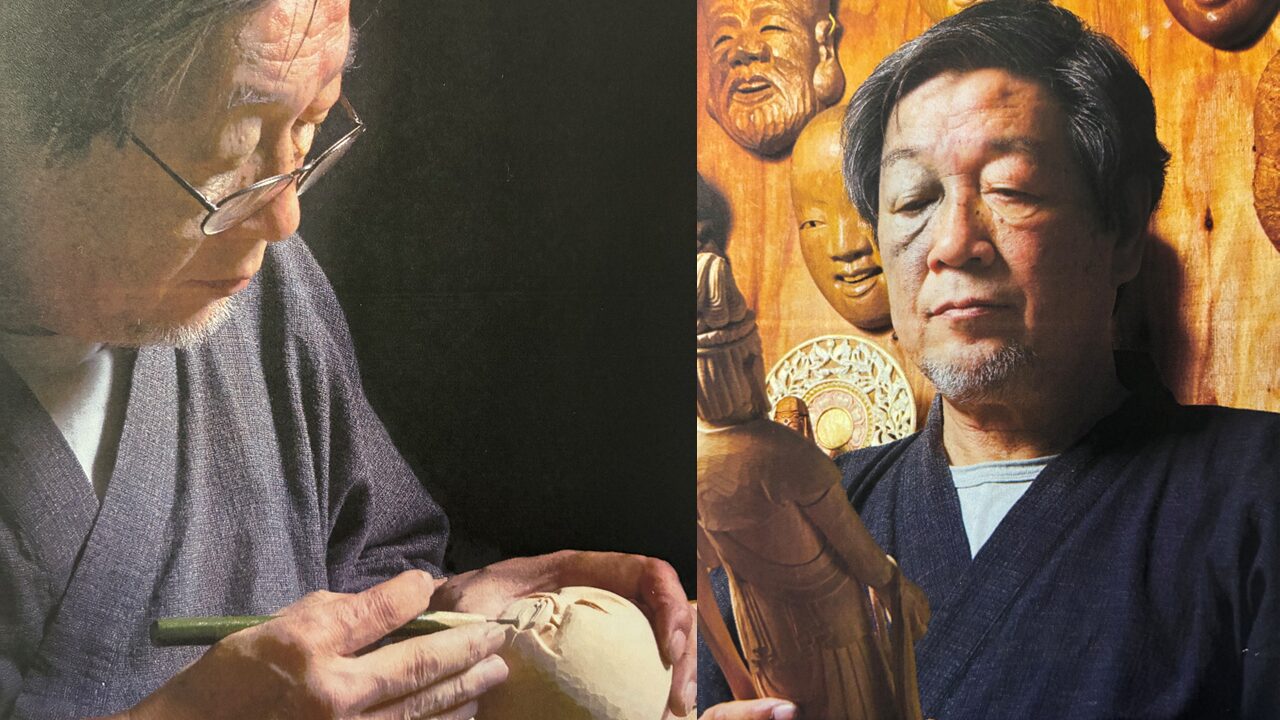
Japanese woodcarving is often imagined as something ancient and unchanging — temple statues, shrine ornaments, timeless techniques handed down quietly through generations. Yet the modern history of woodcarving in Japan tells a far more dramatic story. It is a story of war and reconstruction, of economic miracles and industrial collapse, of global exchange and painful transformation.
Few lives embody this arc more vividly than that of Tōun Uekusa, a master woodcarver now in his eighties.
1. Rebuilding Through Craft: Postwar Beginnings
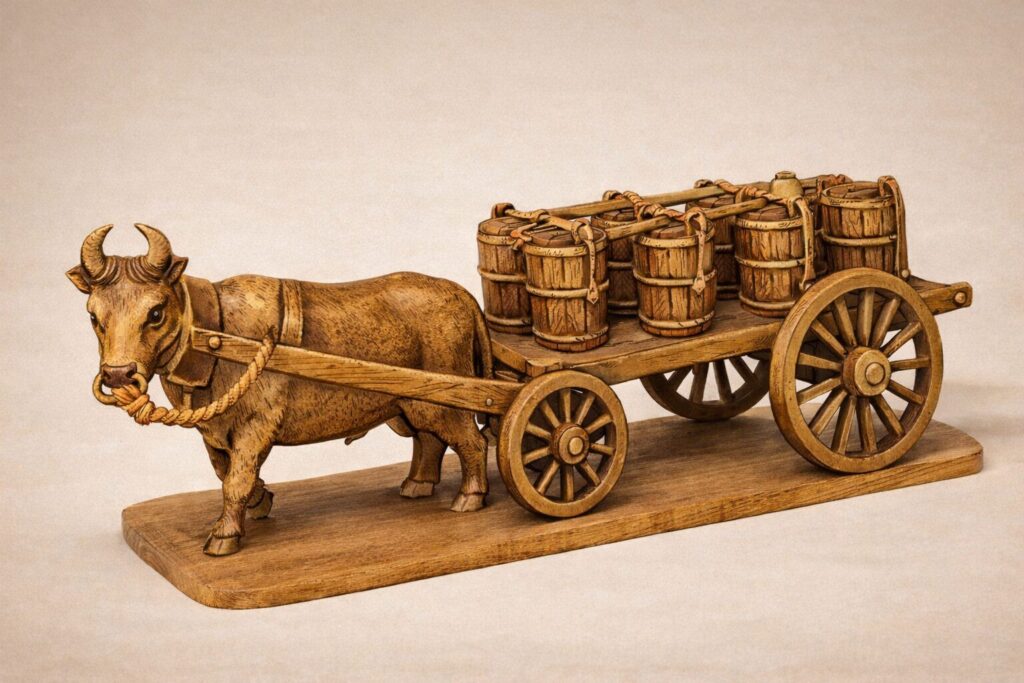
In the aftermath of World War II, Japan was physically devastated and economically fragile. For many families, survival depended on adaptability. Uekusa’s father began by repairing metalware before gradually turning toward woodworking and carving. What started as small-scale repair work grew into a thriving carving workshop in Yokohama.
During the 1950s and 60s, handcrafted wooden objects — souvenirs, toys, decorative items — found eager markets. Many of these works were purchased by American servicemen stationed in Japan, and such crafts became an important source of much-needed foreign currency in the early postwar years. In this way, woodcarving was not merely an artistic pursuit; it was part of Japan’s economic recovery and reentry into the global marketplace.
Young Uekusa grew up surrounded by chisels, wood shavings, and disciplined artisans. After school, instead of playgrounds, he entered the workshop. The rhythm of carving became the rhythm of daily life.
2. Training Beyond the Workshop: The Lineage of a Busshi
Beyond the family workshop, Uekusa also studied under a traditional Buddhist sculptor — known in Japanese as a busshi. A busshi is not merely a sculptor of religious images, but a specialist trained in sacred statuary for temples, grounded in centuries-old techniques and spiritual discipline.
From this teacher, he absorbed more than technical precision. He learned patience, reverence for material, and the mindset required to carve figures that serve devotional purposes.
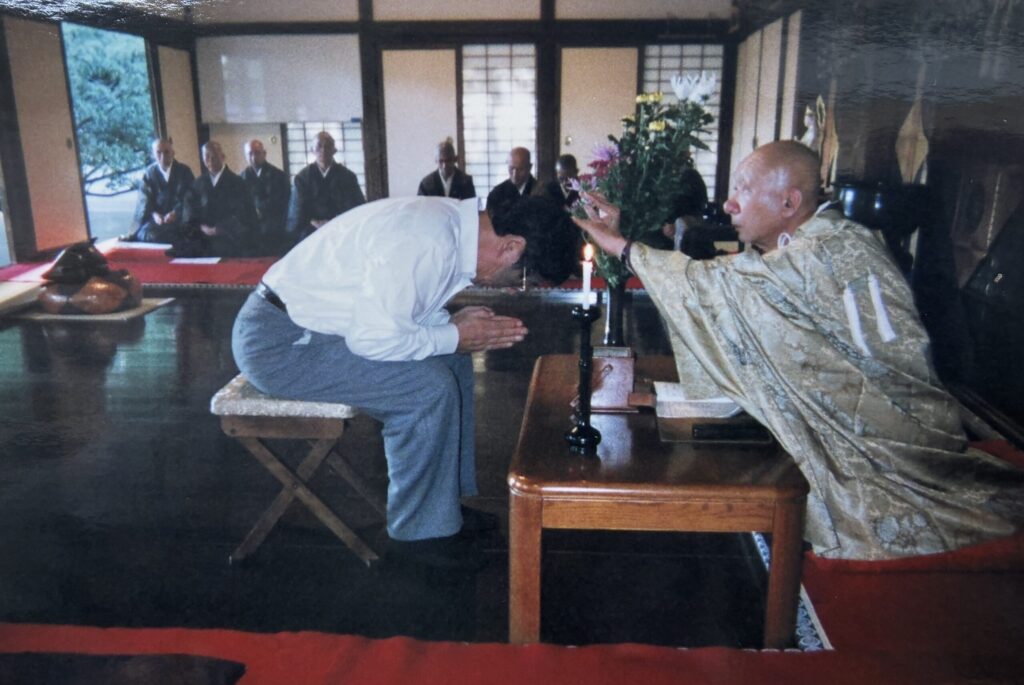
Much later in life — after decades of practice across both sacred and secular carving — his mastery of traditional techniques was formally recognized. In his later years, he received the title of busshi from a renowned temple in Kyoto, an honor rarely granted and regarded as recognition of a lifetime devoted to carving.
This connection to classical Buddhist sculpture would remain a quiet foundation beneath his later industrial and commercial work.
3. The Boom Years — and the Turning Point
By the 1960s, Japan had entered its period of rapid economic growth. The Tokyo Olympics symbolized national resurgence. Demand for crafted goods expanded, and Uekusa assumed leadership of the workshop at just twenty years old.
At its peak, the company employed over 200 workers and associates. Beyond traditional carvings, the workshop produced industrial prototypes, wooden models, and precision-crafted objects for major corporations. Technical excellence and adaptability defined this era.
Yet beneath the prosperity, a shift was underway.
In the 1970s, plastic began replacing wood in everyday products. Traditional carving workshops, once integral to manufacturing and design, faced gradual decline. Then came a more dramatic challenge: overseas mass production.
At the request of the Japanese government, trainees from Southeast Asia came to learn carving techniques. Uekusa, believing that dedication mattered more than nationality, taught them generously — wood selection, blade sharpening, finishing methods, the subtle “feel” of carving.
Years later, those same trainees established workshops in their home countries and began exporting carved products back to Japan — at a fraction of domestic costs.
The result was devastating for local workshops.
Goodwill had unintentionally accelerated competition. Orders declined. The future grew uncertain.
4. A Difficult Decision
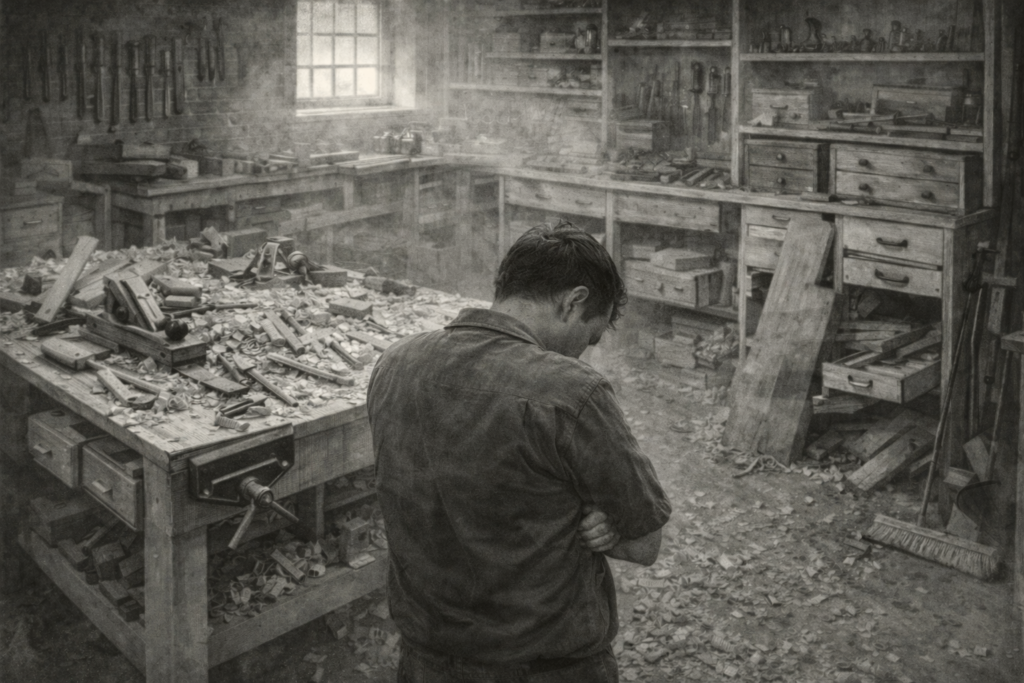
As an employer responsible for the livelihoods of hundreds, Uekusa faced harsh realities. Even major corporations offered financial backing and investment to sustain operations. His technical expertise and integrity were widely respected.
Yet he declined such offers.
He had come to a painful conclusion: the industrial structure itself had changed. Continuing would only prolong hardship for the craftsmen who depended on him.
Ultimately, he made the difficult decision to close the company.
For someone who had lived entirely within the world of woodcarving, this was not simply a business choice — it was the end of an era.
5. From Industry to Education — Carving a Future

In the 1980s, Uekusa opened a woodcarving studio in Yokohama.
But this was not a traditional apprenticeship in the strict sense of a temple busshi. Nor was it a commercial factory. Instead, it was a space where anyone — regardless of age, profession, or experience — could learn to carve.
Students create a remarkable range of works:
- Buddhist statues and heads
- Noh masks
- Decorative lion heads
- Ema plaques
- Animal sculptures
- Even wooden neckties
A selection of representative works can be viewed in the Tōun Uekusa Gallery.
There are no rigid hierarchies. Beginners learn tool handling carefully. Intermediate students are guided in reading grain and form. Advanced students may receive only a few quiet words of advice.
The philosophy is simple: help only as much as necessary, so that the student completes the work through their own effort.
One student began carving at age ninety-five.
In this studio, the scent of wood fills the air. Time flows differently. Some moments are silent and concentrated; others are filled with conversation and shared sweets. What might seem severe from the outside reveals warmth within.
The industrial workshop may have disappeared, but the spirit of carving did not.
Why This Story Matters
The history of Japanese woodcarving in the postwar period is not merely a tale of decline. It is a story of transformation.
From reconstruction to economic miracle, from global competition to reinvention through education, Uekusa’s life reflects the broader trajectory of Japanese craftsmanship in the modern era.
His journey shows that tradition is not static. It survives not by resisting change, but by reshaping itself.
Today, in a quiet classroom filled with wood shavings and patient hands, centuries-old techniques meet contemporary lives. The lineage of the busshi, the discipline of the workshop, and the lessons of industrial rise and fall all converge in one place.
And there, in the steady rhythm of carving, the future of Japanese woodcraft continues to take shape.